

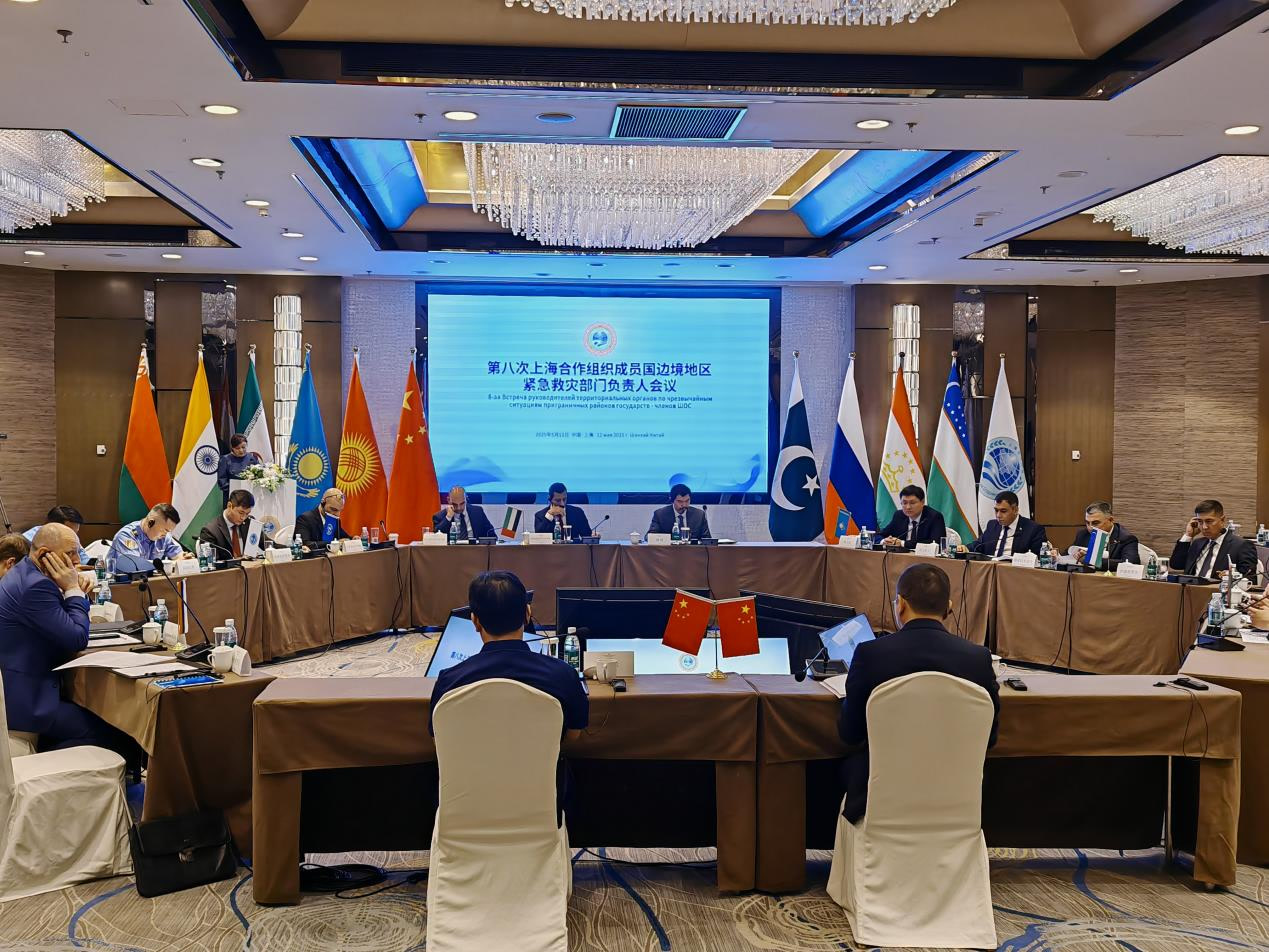
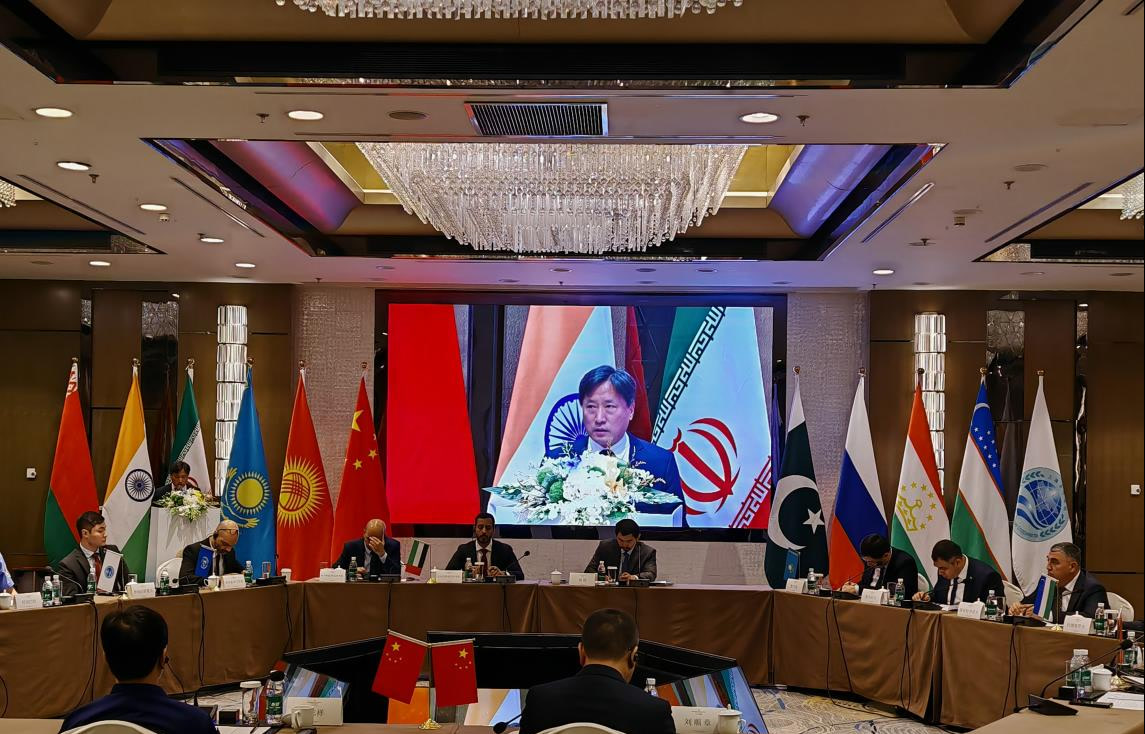
From May 11 to 13, the 8th Meeting of Directors of Emergency Disaster Relief Departments in Border Areas of SCO Member States, together with the China-Central Asia Border Cooperation and Exchange Activity on Emergency Management, was held in Shanghai. Directors of emergency disaster relief departments in border areas of Belarus, Kazakhstan, Kyrgyzstan, Russia, Tajikistan, Uzbekistan, Mongolia and other countries, representatives from the SCO Secretariat and the UN-SPIDER Beijing Office attended the event both online and offline.Liu Zhi, Director of the Emergency Medicine Development Office of Emergency General Hospital (National Research Center for Emergency Medicine), participated in the meeting and delivered a speech on behalf of the China-SCO Emergency Medicine Rescue Cooperation Center for Emergency Disaster Relief Departments.
The China-SCO Emergency Medicine Rescue Cooperation Center for Emergency Disaster Relief Departments was established in 2024 by the Ministry of Emergency Management, based on the National Research Center for Emergency Medicine (Emergency General Hospital). As the first specialized cooperation platform focusing on emergency medicine rescue under the SCO framework, it undertakes multiple functions such as international exchanges and regional collaborative cooperation between China and the SCO in the field of emergency medicine rescue.
Liu Zhi briefed the participants on the work of the China-SCO Emergency Medicine Rescue Cooperation Center for Emergency Disaster Relief Departments. He pointed out that May 12 is both National Disaster Prevention and Reduction Day and International Nurses' Day, and it is of great significance to discuss international cooperation in emergency medicine rescue on such a meaningful day. The Ministry of Emergency Management of China attaches great importance to exchanges and cooperation with SCO member states in emergency medicine rescue, and has established the China-SCO Emergency Medicine Rescue Cooperation Center for Emergency Disaster Relief Departments based on the Emergency General Hospital.
Since its establishment, the Center has actively built an international exchange
mechanism, carried out joint research and technical consulting in fields including emergency medicine rescue, occupational health, and psychological intervention; launched projects for enlightening and improving life safety capabilities, and successfully organized initiatives such as the "Emergency Red Rose" and "Emergency Youth" programs, as well as foreign aid training programs targeting emergency medicine rescue professionals. In April 2025, the Center set up a "Respiratory Endoscopy Training Base", simultaneously launching training on ventilator operation skills and on-site rescue airway management capabilities, and planning to donate medical equipment including ventilators worth nearly 4 million yuan to SCO member states. These small yet impactful projects are not only pragmatic actions to implement the international cooperation mechanism for natural disaster prevention and emergency management under the Belt and Road Initiative, but also important measures to promote mutual support, deepen mutually beneficial cooperation, advance high-quality innovative development among SCO member states, and bring tangible benefits to their peoples.
In response to the initiative of 2025 as the SCO Year of Sustainable Development, the China-SCO Emergency Medicine Rescue Cooperation Center for Emergency Disaster Relief Departments will actively act on the call, focus on boosting development momentum and drive innovations. It plans to promote the rapid translation and application of emerging technologiesemergency rescue practices and occupational safety protection for emergency responders by establishing expert pools and launching special projects; continue to strengthen life safety training and steadily improve the emergency response capacity for life safety among all population groups; organize the 2025 International Forum on Emergency Medicine Rescue and the Expo on Emergency Medical Equipment and Technology, deepen regional technological innovation and industrial capacity cooperation. Through these pragmatic efforts, the Center will fully implement the Eight Major Initiatives for High-quality Belt and Road Cooperation, and support the development of the international cooperation mechanism for natural disaster prevention and control and emergency management under the Belt and Road Initiative.